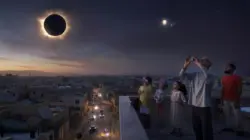
A rare early-season stratospheric warming event is developing in February, and meteorologists around the globe are watching closely. These high-altitude disruptions don’t happen often this early in the year, but when they do, they can significantly influence late-winter weather patterns. Scientists say the intensity of this evolving system could reshape forecasts in the coming weeks, potentially shifting storm tracks, altering temperature trends, and even triggering prolonged cold spells. With computer models rapidly updating, this event is becoming one of the most closely monitored atmospheric developments of the season.
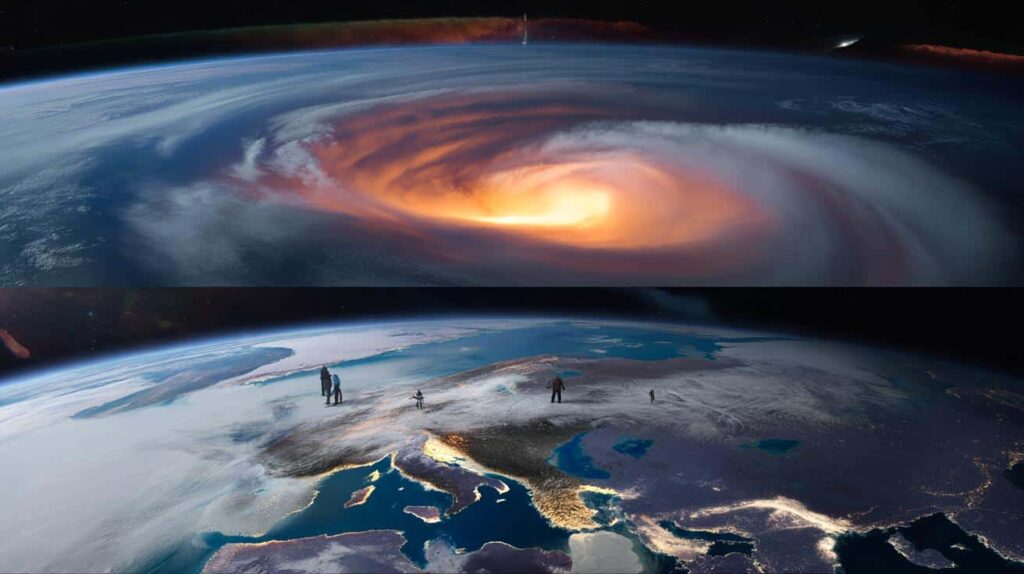
Early-Season Stratospheric Warming Event Gains Momentum
An early-season stratospheric warming event occurs when temperatures in the upper atmosphere rise dramatically within just a few days. This rapid shift can weaken or even disrupt the polar vortex circulation, a powerful ring of winds high above the surface. When that circulation falters, it can set off a chain reaction pattern that filters downward over time. Forecasters are analyzing upper-level wind shifts and tracking pressure anomalies aloft to determine how strong this event may become. The earlier timing makes it particularly noteworthy, as February warmings can influence late-winter conditions more directly than those occurring later in the season.
How the February Stratospheric Warming Could Reshape Winter Forecasts
The developing February stratospheric warming could significantly alter seasonal outlooks. When the upper atmosphere destabilizes, it often leads to a jet stream wobble, allowing colder air masses to plunge farther south than usual. This process can create a blocking high pressure setup that slows weather systems and prolongs certain conditions. In some scenarios, regions may experience a late winter surge of snowfall or freezing temperatures. Meanwhile, others could see shifts toward milder air depending on how the atmospheric wave pattern evolves. Forecast models are closely watching temperature reversal signals to gauge whether the warming will fully disrupt typical circulation.

Global Weather Impacts of a Rare Stratospheric Warming Pattern
A rare stratospheric warming pattern doesn’t just stay confined to the upper atmosphere; its influence can ripple across continents. Once the disturbance descends, it may cause a cold air displacement that reorganizes storm paths and precipitation zones. Meteorologists are evaluating ensemble forecast guidance to assess probabilities of extended cold spells or increased storminess. In some years, similar events have led to extreme weather outbreaks weeks after the initial warming peak. The key factor now is the stratosphere-troposphere coupling, which determines how effectively the atmospheric layers interact and transfer energy downward.
What This Intense Stratospheric Warming Means for the Weeks Ahead
While it’s too early to declare exact outcomes, the intensity of this early-season warming suggests heightened variability ahead. If atmospheric models continue trending toward a strong disruption, the coming weeks could feature more frequent pattern swings and sharper contrasts between warm and cold periods. Much depends on the stability of the weakened vortex and whether high-altitude changes propagate fully to the surface. Scientists emphasize the importance of long-range model trends, ongoing atmospheric data sampling, forecast confidence levels, and potential seasonal pattern adjustments as they refine predictions.
| Factor | Current Status | Potential Impact |
|---|---|---|
| Stratospheric Temperature | Rapidly Rising | Weakens upper winds |
| Polar Vortex Strength | Under Stress | Possible disruption |
| Jet Stream Pattern | Becoming Wavier | Colder air intrusions |
| Surface Forecasts | Highly Variable | Late-winter surprises |
| Model Agreement | Moderate | Forecast uncertainty |
Frequently Asked Questions (FAQs)
1. What is a stratospheric warming event?
It is a rapid rise in upper-atmosphere temperatures that can disrupt typical winter wind patterns.

2. Why is an early-season event significant?
An earlier event can more strongly influence late-winter surface weather patterns.
3. Does stratospheric warming always bring extreme cold?
No, outcomes vary depending on how atmospheric changes spread downward.
4. How long could the impacts last?
Effects can persist for several weeks as atmospheric patterns gradually reset.