If you’ve ever visited an older relative during the colder months, you may have noticed something unusual resting on top of their houseplant soil—a simple pine cone. At first glance, it looks decorative. But this old-fashioned gardening habit has practical roots. Long before modern plant gadgets and moisture meters became popular, experienced growers relied on natural solutions to protect indoor plants during winter. Surprisingly, placing a pine cone on houseplant soil isn’t just folklore; it’s a smart, low-cost trick that quietly supports healthier plants when temperatures drop and indoor air becomes dry.
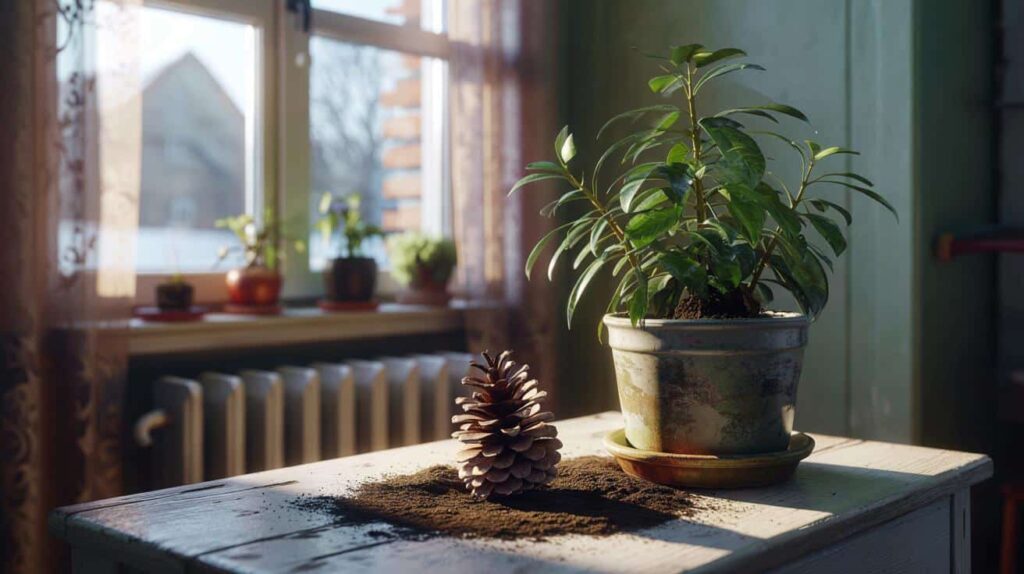
Why Older Generations Use Pine Cones on Houseplant Soil in Winter
Older plant lovers understood how harsh winter conditions could be on indoor greenery. Heating systems create dry indoor air, which pulls moisture from soil much faster than expected. A pine cone acts as a light barrier, helping with moisture retention while still allowing the soil to breathe. It also provides a layer of natural soil insulation, reducing temperature fluctuations near plant roots. Beyond that, pine cones discourage curious pets and reduce surface disturbance, supporting plant root protection. What seems like a rustic decoration is actually a thoughtful response to seasonal stress, passed down through generations who relied on observation rather than technology.
How the Pine Cone Trick Actually Works for Indoor Plants
The science behind this winter plant hack is surprisingly simple. When placed on soil, a pine cone slows evaporation by partially covering the surface, supporting soil moisture control. Its layered structure traps small pockets of air, improving air circulation balance while preventing compacted soil. Pine cones also break up direct exposure to warm air from heaters, assisting with temperature regulation layer around the base of the plant. In some cases, they even help with fungus prevention support by reducing splash-back during watering. It’s a passive system—no plugs, no batteries—just natural material working quietly to stabilize your plant’s environment.

Benefits of Placing a Pine Cone on Plant Soil During Cold Months
Adding a pine cone isn’t just practical; it offers multiple seasonal perks. First, it promotes winter plant care by reducing stress caused by sudden indoor climate shifts. It can also act as a gentle deterrent against indoor pest control issues by making the soil surface less inviting for gnats. Gardeners appreciate that it doubles as natural mulch cover, improving water distribution when watering. On top of that, it’s an easy example of eco-friendly gardening—reusing what nature provides instead of buying synthetic solutions. Simple, sustainable, and effective, this trick proves that sometimes traditional wisdom outperforms trendy plant hacks.
Is This Old-School Gardening Trick Worth Trying?
In a world full of complicated plant-care advice, the pine cone method stands out for its simplicity. It requires no special tools and fits perfectly into a low maintenance routine. While it won’t replace proper watering habits or light adjustments, it does offer subtle seasonal plant support during colder months. The key advantage lies in simple natural solutions that work with, not against, your plant’s needs. For anyone looking to reduce winter stress on indoor greenery, this small addition can contribute to healthier soil surface conditions. Sometimes, the smallest adjustments make the biggest seasonal difference.
| Benefit | How It Helps |
|---|---|
| Moisture Control | Slows evaporation during dry winter months |
| Temperature Stability | Reduces soil exposure to heating fluctuations |
| Pest Reduction | Makes soil surface less attractive to gnats |
| Eco-Friendly Option | Uses natural, biodegradable material |
| Decorative Touch | Adds a rustic look to indoor plants |
Frequently Asked Questions (FAQs)
1. Does a pine cone really help retain moisture?
Yes, it slows surface evaporation by partially covering the soil.
2. Can this trick replace regular watering?
No, it supports moisture balance but does not replace proper watering.
3. Is it safe for all houseplants?
It is generally safe for most indoor plants when the cone is clean and dry.
4. Should the pine cone be treated before use?
It’s best to rinse and dry it thoroughly to avoid introducing pests.