Choosing the right hair color after 60 can make a remarkable difference, especially if you have fine hair. As strands naturally become thinner and more delicate with age, certain shades can unintentionally emphasize wrinkles, dullness, or sagging. According to experienced hairdressers, the wrong tone can create harsh contrasts and drain warmth from the complexion. The goal isn’t to avoid color altogether—it’s to pick shades that enhance softness and brightness. Let’s explore three hair colors that can age the face the most and why they may not be the best choice for fine, mature hair.
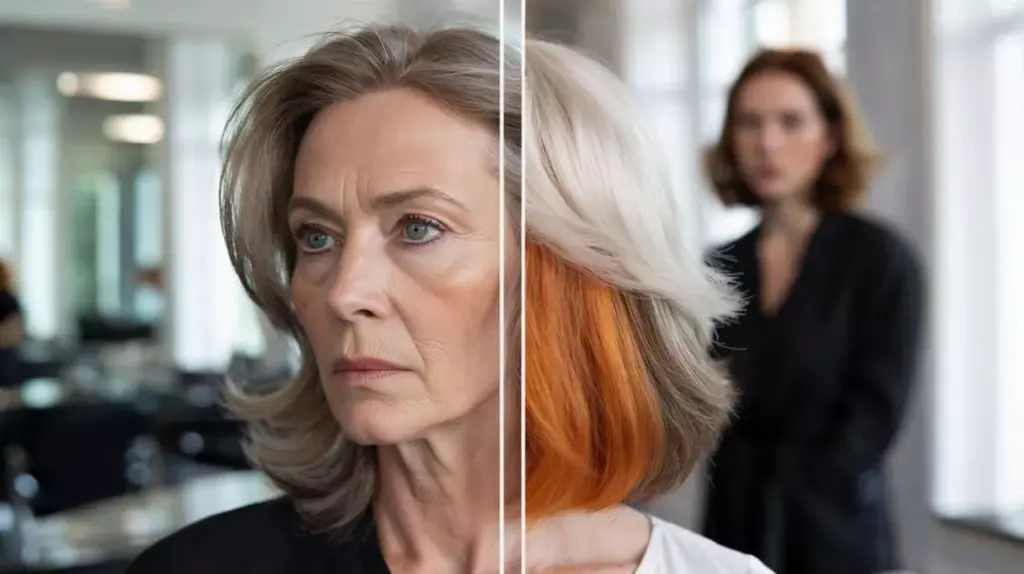
Harsh Jet Black: A Risky Hair Color Choice for Fine Hair After 60
Jet black might seem bold and elegant, but for fine hair after 60, it often creates an unforgiving contrast against lighter or aging skin. This intense shade can highlight deep facial lines and draw attention to skin texture changes that might otherwise go unnoticed. Because fine strands lack density, ultra-dark pigments can also make hair appear flatter and thinner. Hair professionals often warn about the aging color mistake of going too dark, especially without dimension. Instead of adding drama, jet black can result in a harsh overall look that overshadows natural softness and makes features seem sharper than intended.
Platinum Blonde on Mature Fine Hair: Why It Can Wash You Out
Platinum blonde is trendy and eye-catching, but it can be problematic for mature, fine hair. Extremely light tones sometimes create a washed-out complexion, particularly when natural warmth has faded over time. Without subtle lowlights or depth, platinum can accentuate thin hair strands and reduce the appearance of volume. Stylists often note that over-bleached shades contribute to brittle hair texture, making fine hair more fragile. When color lacks balance, it can leave the face looking tired rather than radiant. The key issue is contrast—too little can be just as aging as too much, especially with mature skin tone considerations.
 When I leave the house, I put a glass and a sheet of paper in the sink : a simple but smart habit
Flat Ash Brown: The Subtle Hair Shade That Can Add Years
Ash brown may sound safe and neutral, yet overly cool, flat versions can age the face unexpectedly. On fine hair after 60, this tone can emphasize dull skin undertones and create a lack of vibrancy. Without dimension, ash shades often result in lifeless hair appearance, especially under natural light. Hairdressers point out that a cool-toned overload can drain warmth from the face, making features seem less lively. Adding soft highlights or warmer accents can prevent the aging shade effect that sometimes comes with monotone ash brown, helping fine hair look fuller and more dynamic.
Choosing More Flattering Alternatives for Fine Hair After 60
The good news is that avoiding aging hair colors doesn’t mean limiting your options. Subtle warmth, gentle highlights, and dimensional blends can create a soft framing effect around the face. Hair experts often recommend shades that bring natural glow enhancement without overpowering delicate strands. By focusing on face-brightening tones, you can balance skin changes while making fine hair appear thicker. Even small adjustments, like adding lowlights, can deliver a youthful color balance that refreshes your overall look. The right color should complement—not compete with—your features.
| Hair Color | Main Concern | Impact on Fine Hair | Better Alternative |
|---|---|---|---|
| Jet Black | High contrast | Emphasizes thinness | Soft dark brown |
| Platinum Blonde | Too light | Highlights fragility | Warm beige blonde |
| Flat Ash Brown | Lack of warmth | Looks dull | Golden brown blend |
| Monotone Shades | No dimension | Reduces volume look | Multi-tonal highlights |
Frequently Asked Questions (FAQs)
1. Why does very dark hair age the face after 60?
Very dark shades create strong contrast that can highlight wrinkles and fine lines.
2. Is blonde hair always aging for fine hair?
No, warmer blondes with dimension can brighten the face beautifully.
3. How can I add volume with hair color?
Adding subtle highlights and lowlights creates depth and the illusion of thickness.
4. Should mature women avoid cool-toned shades completely?
Not necessarily, but balancing cool tones with warmth prevents a dull appearance.