The sky is preparing for one of the most breathtaking astronomical events in modern history — the longest solar eclipse of the century. Astronomers have now identified the exact date when daylight will dramatically fade into an eerie twilight, creating a once-in-a-lifetime spectacle across multiple regions. This rare celestial alignment promises to captivate scientists, skywatchers, and casual observers alike. As anticipation builds worldwide, experts are urging people to prepare early to safely witness what many are calling a truly unforgettable cosmic performance.
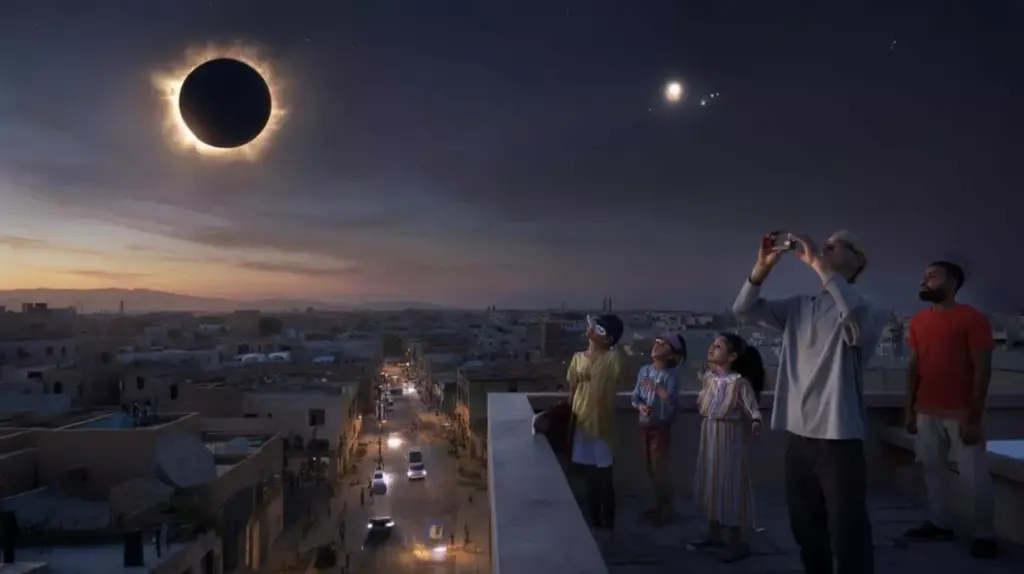
Longest Solar Eclipse of the Century: When Daylight Turns into Twilight
The upcoming longest solar eclipse is expected to transform bright afternoon skies into a surreal dusk within minutes. During this extraordinary event, the total solar eclipse phase will stretch longer than any seen in decades, offering an extended period of complete sun coverage. Observers located along the path of totality will experience the most dramatic visual change, where stars briefly appear and temperatures subtly drop. Scientists describe this as a rare celestial alignment that occurs when the Moon perfectly blocks the Sun’s disk. Unlike shorter eclipses, this prolonged darkness will allow researchers more time to study solar activity and atmospheric reactions, making it both visually stunning and scientifically valuable.
Century’s Longest Eclipse Date Revealed by Astronomers
Experts have pinpointed the official date after years of orbital calculations and advanced modeling. This astronomical milestone marks a historic moment for eclipse tracking, as the duration is projected to exceed previous records within this century. The phenomenon results from a precise orbital alignment event, where the Moon is positioned at an optimal distance from Earth to maximize coverage time. During the extended maximum eclipse duration, researchers will monitor the Sun’s outer atmosphere, also known as the corona. The event is already generating excitement across scientific communities and among passionate skywatchers who are planning trips to secure the best viewing spots.

How the Longest Solar Eclipse Will Dazzle Multiple Regions
This extraordinary solar eclipse will sweep across several regions, offering millions the chance to witness a dramatic daytime darkness. As the Moon’s shadow races across the surface, spectators will observe shifting light patterns and a glowing halo called the corona. Experts emphasize the importance of using certified eclipse glasses to avoid eye damage during partial phases. The spectacle is expected to create unforgettable skywatching experience moments, drawing travelers and astronomy enthusiasts together. In addition, scientists will collect data on solar corona visibility, helping refine models of solar wind behavior and magnetic activity.
What Makes This Solar Eclipse So Significant?
The importance of this eclipse goes beyond its record-breaking length. A longer total phase allows researchers to conduct deeper studies of solar atmosphere research and observe subtle changes in light and temperature. For observers, the extended darkness creates a more immersive once in century spectacle that feels almost otherworldly. Experts also highlight the opportunity for scientific observation missions to gather rare measurements that are impossible during ordinary conditions. Combined with its broad visibility and exceptional duration, this event stands as a defining historic space phenomenon of our era.
| Feature | Details |
|---|---|
| Event Type | Total Solar Eclipse |
| Expected Duration | Longest of the Century |
| Best Viewing Area | Path of Totality Regions |
| Safety Requirement | ISO-Certified Eclipse Glasses |
| Scientific Focus | Solar Corona & Atmospheric Study |
Frequently Asked Questions (FAQs)
1. What makes this the longest solar eclipse of the century?
The duration of total sun coverage is projected to be longer than any other eclipse in this century.

2. Is it safe to look at the solar eclipse directly?
No, you must use certified eclipse glasses or approved viewing equipment.
3. Why is the path of totality important?
Only locations within the path of totality will experience complete daytime darkness.
4. What scientific research will be conducted during the eclipse?
Researchers will study the Sun’s corona, magnetic activity, and atmospheric effects.